


Do you often find yourself feeling completely drained, overwhelmed by daily demands, or simply yearning for a moment of peace? Many individuals mistakenly believe that effective self treatment ideas and true self-care demand hefty financial investments—think luxurious spa treatments, premium products, or an exotic escape. However, this common misconception couldn’t be further from the truth. In reality, nurturing your well-being doesn’t have to break the bank or consume precious hours you don’t have. This article aims to transform your perspective on personal wellness by revealing a wealth of powerful, accessible, and completely free self-care ideas you can implement right at home. We’ll show you how to cultivate genuine peace and rejuvenation using resources you already possess, proving that authentic self-care at home is not only possible but incredibly empowering.
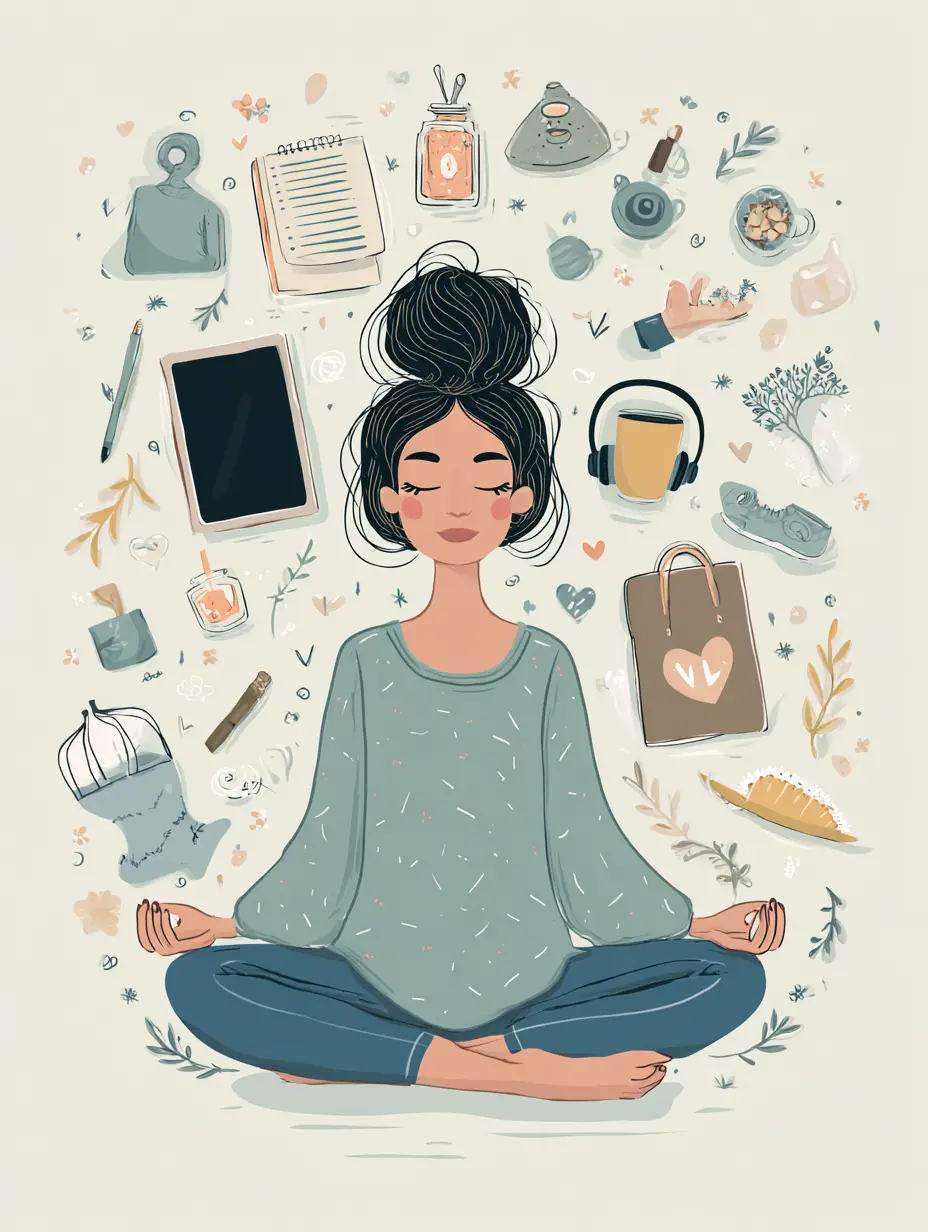
The true essence of self-care is not about indulgence; it’s about intentional practices that preserve and restore your mental, emotional, and physical health. Unlike a quick fix, genuine self-care is a sustained commitment to your inner balance and resilience. It’s the preventative measure against burnout and the daily ritual that keeps stress at bay. While the market is flooded with pricey “wellness” products and services, the most impactful self-care activities often stem from simple, mindful actions integrated seamlessly into your daily life. Forget the pressure of expensive products; the real magic happens when you connect with yourself, utilizing what’s readily available. This guide is packed with practical and simple self-care activities you can do at home for free, ensuring that personal well-being is always within reach.
We understand that for busy professionals, remote workers, dedicated parents, and students, both time and budget are often tight constraints. This is precisely why embracing no-cost self-care and budget self-care is a game-changer. Our goal is to empower you with easy self-care at home options that require zero expenditure and minimal effort, fitting effortlessly into your existing routine. You’ll discover effective strategies for stress relief at home, mindful practices at home, and ways to enhance your daily self-care routine without ever needing to leave your comfort zone or open your wallet. By providing 18 distinct, home-based self-care ideas, we’re setting the stage for a holistic self-care approach that is sustainable, personalized, and truly focused on your well-being, challenging the notion that self-care is an unattainable luxury. Get ready to explore how to practice self-care without spending money and unlock a calmer, happier you.
The True Meaning of Self-Care: Beyond the Spa Day
Let’s begin by challenging a prevalent misconception: self-care is not simply a luxurious indulgence. While a relaxing day at a high-end spa or a shopping spree might offer temporary relief, these activities often cater to an external, reactive form of comfort. True self-care delves much deeper. It’s a deliberate, conscious practice of taking proactive steps to safeguard and enhance your physical, mental, and emotional health. Think of it not as a treat you occasionally earn, but as essential maintenance for your entire being—a foundational aspect of a robust wellness routine at home. Without integrating consistent self-care for stress into our lives, we risk depletion, chronic overwhelm, and a significant reduction in our overall quality of life. This deeper understanding forms the core of effective self-care at home, transcending superficial pampering.
Many articles touch upon self-care without truly dissecting its profound purpose. Unlike a fleeting escape, authentic self-care is about building enduring resilience. It equips you with the internal resources to navigate life’s inevitable challenges, rather than just recovering from them. It’s a proactive strategy for stress relief at home, allowing you to manage daily pressures more effectively and prevent burnout before it takes hold. Imagine your personal energy as a well: self-care isn’t about occasionally dipping a bucket in when it’s nearly dry; it’s about consistently replenishing the source. This holistic self-care approach emphasizes mindful practices at home that nourish you from the inside out, making it an indispensable part of any personal wellness tips. It’s about tuning into your inner signals and intentionally giving your mind and body what they genuinely need to thrive.
This internal focus clarifies why effective self-care without expensive products is not only possible but often more impactful. It’s not about what you buy, but what you do and how you choose to interact with your inner world. Whether it’s everyday well-being habits or easy ways to practice self-care at home for free, the emphasis is on accessible, consistent effort. This means embracing a daily self-care routine that is both sustainable and adaptable, offering mental health tips at home that are within everyone’s reach. By recognizing self-care as a non-negotiable component of your well-being, rather than a luxury, you empower yourself to live a more balanced, fulfilling life, proving that what is self-care truly is a powerful, intrinsic skill.
Why Home-Based & Free Self-Care: Your Wellness Game Changer
Life in the 21st century often feels like a relentless treadmill, constantly demanding more time, energy, and, invariably, money. These formidable pressures are precisely why so many individuals struggle to prioritize their self-care. The notion of adding another expense or dedicating precious hours to a “self-care ritual” can feel utterly overwhelming, pushing essential personal wellness to the back burner. This is where embracing budget self-care and accessible self-care methods truly becomes a game-changer. By focusing on simple personal wellness practices at home, you unlock a powerful strategy for maintaining your well-being without creating new burdens. It’s about dismantling the common barriers and discovering effective self-care without expensive products.
Overcoming Common Barriers to Self-Care
A significant advantage of home-based, free self-care lies in its inherent ability to circumvent the primary obstacles that deter many from engaging in wellness practices. No longer is a busy schedule an insurmountable hurdle when you can seamlessly integrate mindful practices at home. Travel time is eliminated, appointment bookings become unnecessary, and most critically, financial strain is removed from the equation. This approach radically democratizes wellness, making stress relief at home available to everyone, regardless of their economic situation. It’s not about finding extra time or money; it’s about optimizing the resources you already possess and integrating them into your existing framework. Think of it as finding pockets of peace within your current life structure.
Empowering Your Wellness Routine: At Home, For Free
Embracing easy self-care at home options represents a profound act of empowerment. It places the responsibility and capability for your well-being firmly in your own hands, utilizing what’s already available to you: your living space, your natural environment, your breath, and your mind. This proactive stance contrasts sharply with relying on external services or products, which can foster a sense of dependency. The budget-friendly self-care at home tips we’ll explore demonstrate that the most potent forms of self-care are often the simplest, requiring only your intention and presence. Whether you’re seeking home self-care ideas for stress relief or a holistic self-care approach, the benefit is clear: you gain control over your own peace and rejuvenation. This shift allows you to cultivate a sustainable daily self-care routine that truly supports your mental health at home, proving that you don’t need a lavish budget to nurture yourself effectively. By learning how to practice self-care without spending money, you invest in your most valuable asset: yourself.
Quick Reference: Your 18 At-Home Self-Care Ideas at a Glance
Before we dive into the specifics of each recommendation, here’s a concise overview of the 18 incredible free self-care ideas you’re about to explore. This quick-reference guide is designed to offer an immediate snapshot of all the self-care activities at home, making it easy to spot an idea that resonates with you right now. Use this list to quickly find inspiration and understand the breadth of budget self-care options available to you, proving that effective self-care without expensive products is entirely within reach.
- Mindful Breathing Exercises
- Journaling for Reflection
- Practicing Gratitude
- Digital Detox Hour
- Learning Something New (Free Online)
- Gentle Stretching or Yoga
- Taking a Mindful Walk in Nature (or backyard)
- Prioritizing Hydration
- Scheduling a Power Nap
- Sensory Appreciation
- Decluttering a Small Space
- Rearranging Your Environment
- Engaging in Free Creative Expression
- Writing a Handwritten Letter
- Connecting with Loved Ones (Virtually)
- Listening to Inspiring Podcasts/Audiobooks
- DIY Self-Massage
- Mindful Eating (Even a Simple Snack)
Category 1: Nurturing Your Mind & Spirit (Mental & Emotional Well-being)
Your mental and emotional state forms the very foundation of your overall well-being. These practices are meticulously designed to help quiet the incessant noise of daily life, assist you in constructively processing complex emotions, and ultimately cultivate a profound sense of inner peace. All of these powerful activities require nothing more than your attentive presence and intention, making them truly effective mental health tips for home. These free self-care ideas to do at home are not only accessible but also incredibly impactful for fostering emotional self-care activities.
1. Practice Mindful Breathing: Your Inner Anchor
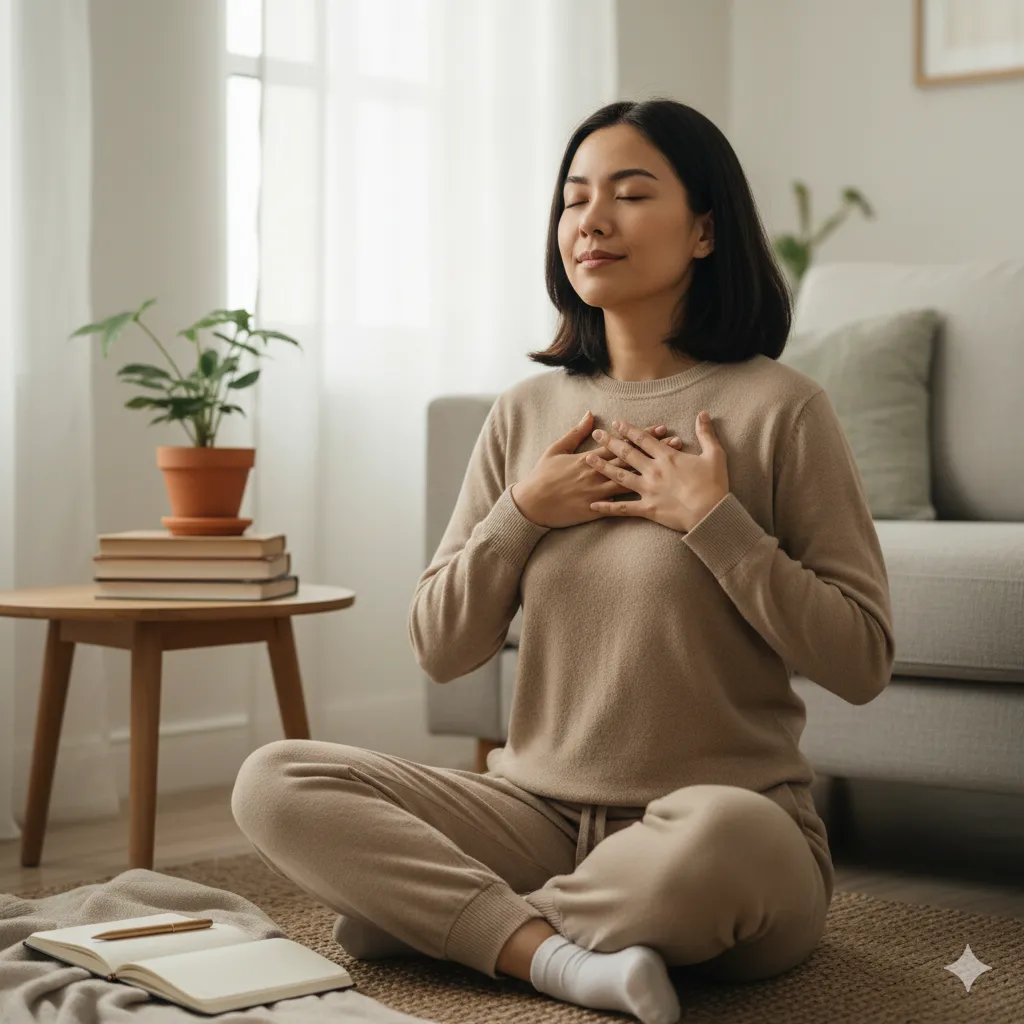
Your breath is a powerful tool for influencing your nervous system. Mindful breathing exercises, like the 4-7-8 method (inhale for 4 counts, hold for 7, exhale for 8), can quickly reduce anxiety and induce calm. To start, find a quiet place, sit comfortably, and focus on your breath. Observe the rise and fall of your chest or abdomen and the sensation of air through your nostrils. This practice is a simple self-care method requiring no equipment or experience, ideal for stress relief at home.
- Why it works: Conscious, slow, and deep breathing sends crucial signals of safety and relaxation to your brain. This directly impacts your autonomic nervous system, effectively reducing the presence of stress hormones and promoting a profound state of tranquility.
- No expensive products: Your breath is an inherent, ever-present part of you, entirely free and constantly available.
2. Journaling for Reflection: Unpacking Your Thoughts
Grab any notebook or loose sheets of paper, along with a pen, that you have conveniently lying around. Journaling is not about crafting perfect prose or adhering to strict grammar rules; its profound purpose is to provide a safe, private space to externalize your thoughts, feelings, and worries, moving them from the confines of your mind onto a tangible page. Utilize this practice as an outlet to vent frustrations, brainstorm creative solutions, or simply observe the ever-changing landscape of your inner world. You might choose to write about the events of your day, explore your deepest emotions, or respond to reflective prompts such as, “What’s occupying my mind right now?” or “What am I learning about myself today?” This powerful form of at home self-care offers a unique pathway to self-discovery.
- Why it works: Journaling provides an invaluable, non-judgmental outlet for complex emotions, helps to clarify muddled thoughts, and can serve as an exceptionally powerful tool for fostering self-awareness and discovering personal solutions to challenges. It’s a key component of mindful practices at home.
- No expensive products: Any paper and any writing instrument will more than suffice. The transformative magic truly resides within the raw, honest process of putting thoughts to paper.
3. Cultivating Gratitude: Shifting Your Lens
Actively shift your perspective by deliberately focusing your attention on the positive aspects of your life, no matter how insignificant they might initially appear. Dedicate a focused 5-10 minutes to either mentally reflecting upon or physically writing down things for which you genuinely feel grateful. This simple yet profound exercise could include acknowledging the warmth of your morning coffee, the comforting sunlight streaming through your window, a simple act of kindness from a stranger, or even the profound comfort found in your own bed. This daily ritual is a potent tool for effective self-care without expensive products, actively training your mind to seek out the positive.
- Why it works: Practicing gratitude literally rewires your brain’s neural pathways, encouraging it to more readily notice and appreciate positive experiences. This consistent practice has a direct and significant impact on boosting mood, enhancing overall happiness, and fostering a more optimistic outlook. It’s an accessible form of holistic self-care.
- No expensive products: Requires only your intentional thoughts, or a basic pen and paper if you opt for a written record.
4. The Digital Detox Hour: Reclaiming Your Mind
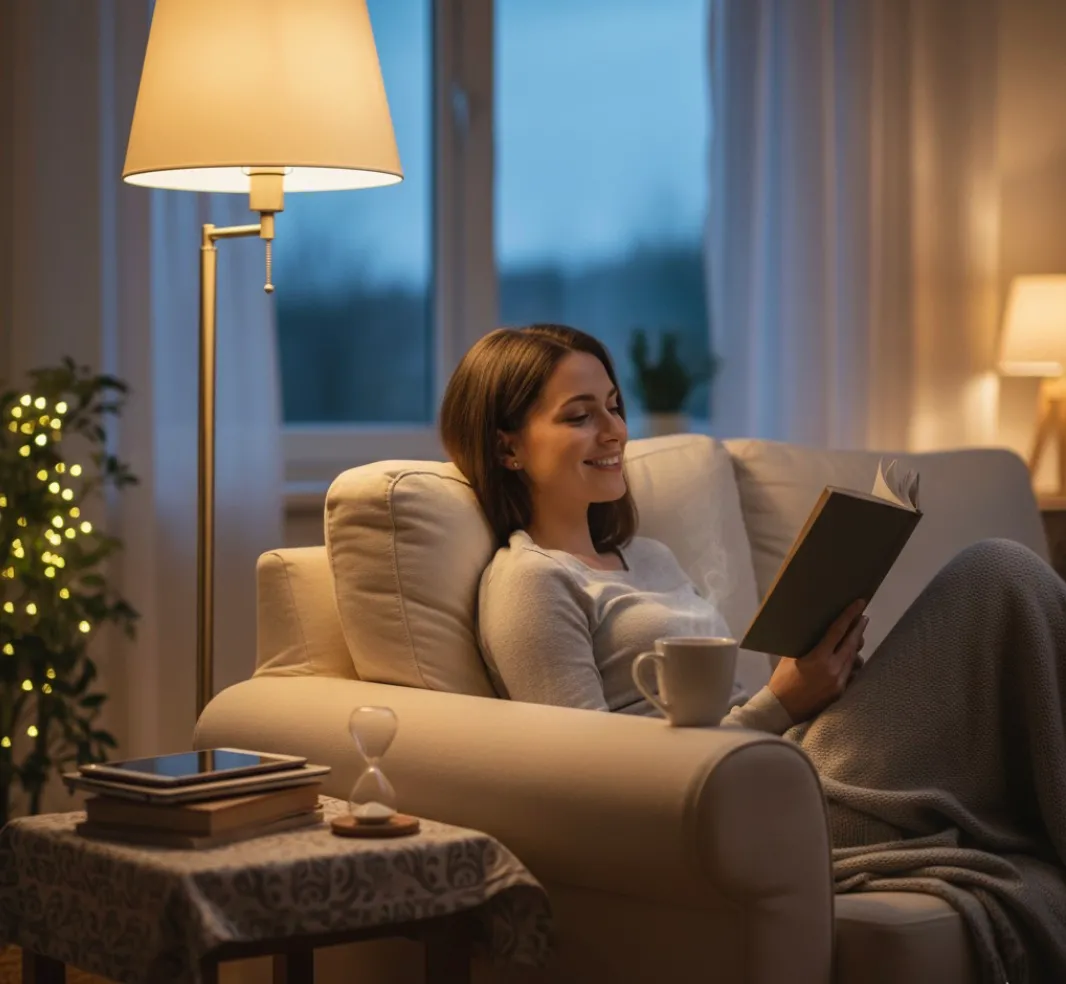
In our hyper-connected, always-on world, the incessant demands of digital devices can act as a significant drain on our mental energy and focus. Select a designated period—even just a concentrated 30 minutes or a full hour—to consciously and completely disconnect. This means putting your smartphone on airplane mode, closing your laptop, and deliberately stepping away from all screens. Use this newly reclaimed time for one of the other beneficial simple self-care activities on this list. This act of disengagement is a vital component of a modern wellness routine at home.
- Why it works: A digital detox hour significantly reduces cognitive fatigue, measurably improves your ability to focus on tasks, and most importantly, creates essential mental space for genuine real-world engagement, introspection, and deep relaxation. It’s crucial for mental health tips home.
- No expensive products: This powerful act of self-care merely requires your willpower and the digital devices you already own.
5. Learning Something New (Free Online): Igniting Curiosity
Stimulate your brain and rekindle your innate curiosity without spending a single penny. The internet is an unparalleled repository of free educational content, offering an endless array of possibilities. You could choose to watch a captivating documentary, learn a handful of new phrases in a foreign language using a complimentary app, or delve deep into a fascinating topic on Wikipedia that has always piqued your interest. This engages your intellect and provides a wonderful form of proactive self-care. It’s about how to practice self-care without spending money by leveraging readily available knowledge.
- Why it works: Engaging in continuous learning keeps your mind agile and active, provides a rewarding sense of personal accomplishment, and offers a healthy, stimulating distraction from everyday stressors and worries.
- No expensive products: This utilizes your existing internet connection and the devices you already possess, transforming them into tools for personal growth.
6. Creative Expression: Unleashing Your Inner World
You absolutely do not need to possess artistic talent or be a professional to engage in profoundly beneficial creative expression. Embrace the freedom to doodle, hum a favorite tune, jot down a short poem, or even tell an imaginative story to yourself or a beloved pet. Utilize any materials you have readily available – it could be an old pencil, a piece of scrap paper, or simply the sound of your own voice. The ultimate goal here is pure, uninhibited expression, not the pursuit of perfection. This makes it one of the most accessible and cheap self-care ideas, transforming everyday items into tools for emotional release.
- Why it works: Creative activities are inherently meditative and deeply immersive, offering a powerful avenue to process complex emotions. They also provide a joyful, playful release from the often rigid constraints and responsibilities of adult life, fostering mental clarity and emotional regulation.
- No expensive products: This relies entirely on your boundless imagination and common household items, proving what are some free self-care activities at home that are both engaging and therapeutic.
Category 2: Rejuvenating Your Body (Physical Health & Comfort)
Our bodies are incredible vessels that carry us through every moment of our lives, and they profoundly deserve gentle, intentional attention. This section delves into a collection of practical physical self-care ideas centered on fostering physical comfort, encouraging gentle movement, and engaging your senses using only everyday items you likely already possess. Each suggestion provides clear, actionable steps and highlights the specific wellness benefits, addressing informational intent by showing you how to achieve body care at home for free. These are effective ways to support your physical well-being without any financial strain, offering simple self-care activities you can do at home.
7. Gentle Stretching or Yoga: Flexible Body, Calm Mind
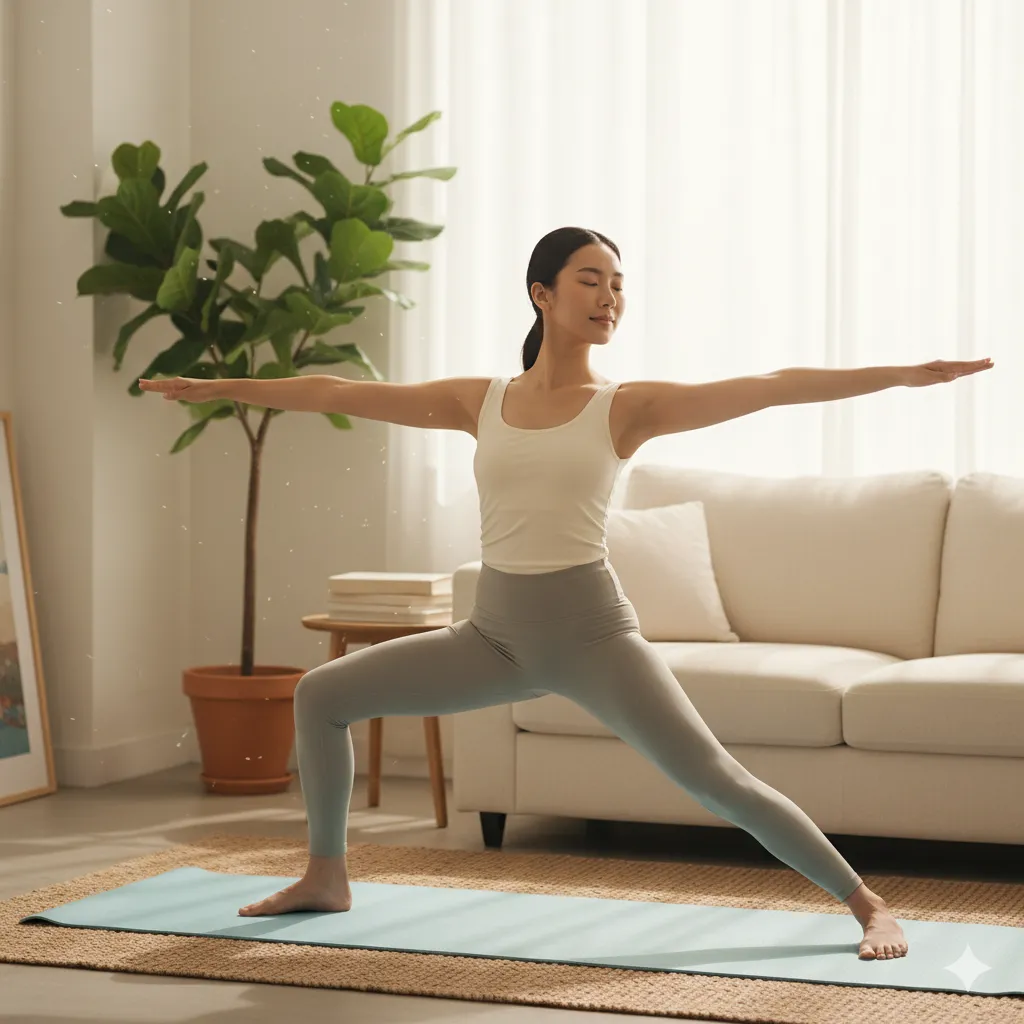
You absolutely do not need an expensive gym membership, fancy equipment, or even a specialized yoga studio to reap the profound benefits of movement. Many free online resources, like YouTube channels, offer guided stretching routines or beginner yoga sequences that you can follow from your living room. Alternatively, simply listen intently to your body and engage in gentle, intuitive movements. Focus specifically on areas that tend to accumulate tension, such as your neck, shoulders, or hips. Hold each stretch for a comfortable 20-30 seconds, ensuring deep and steady breathing throughout. This practice is an accessible and easy self-care at home activity that connects your physical and mental states.
- Why it works: Regular gentle movement significantly improves flexibility, effectively releases accumulated muscle tension, and can be incredibly calming, fostering a vital connection between your mind and body. It’s a key component of any effective wellness routine at home.
- No expensive products: Requires only your body and a modest amount of floor space.
8. Mindful Walk in Nature: Connecting with the Outdoors
Step outside your front door, even if it’s just into your own backyard, a nearby park, or simply around your neighborhood block. The key is to transform this into a mindful practice. Leave your phone behind or put it on silent, and actively engage your senses. Pay close attention to your surroundings: the cheerful chirping of birds, the gentle rustle of leaves, the feel of the breeze on your skin, or the vibrant colors of blooming flowers. This simple act of connection with nature is a powerful form of no-cost self-care.
- Why it works: Spending time in nature, even briefly, has been scientifically shown to reduce stress hormones, lower blood pressure, boost mood, and improve cognitive function. It provides gentle physical activity while offering mental respite. It’s excellent for stress relief at home.
- No expensive products: All you need are your own two feet and the natural world around you.
9. Prioritizing Hydration: Simple Elixir for Energy
It might seem like a basic piece of advice, yet a surprising number of us are unknowingly functioning in a state of chronic dehydration. Make it a conscious practice to keep a glass or reusable bottle of water nearby and sip from it consistently throughout your day. For an added refreshing twist and a subtle flavor enhancement, consider adding a slice of lemon, cucumber, or a few mint leaves to your water. This fundamental yet often overlooked aspect of a daily self-care routine is crucial for overall bodily function.
- Why it works: Adequate hydration is absolutely vital for maintaining consistent energy levels, optimal brain function, healthy skin, and the efficient operation of nearly every bodily system. It’s an indispensable component of physical self-care ideas.
- No expensive products: Relies solely on tap water and a reusable container you likely already own.
10. Scheduling a Power Nap: A Quick Recharge
Sometimes, a brief period of restorative rest is precisely what your body and mind need to reset. Set a gentle alarm for a short, focused power nap of 20-30 minutes. Allow yourself to fully relax, and if sleep comes, embrace it. The critical part is to wake up within this short window to avoid falling into deeper sleep cycles, which can leave you feeling groggy. This indoor self-care practice is a perfect solution for combating mid-day fatigue.
- Why it works: A well-timed power nap can significantly boost alertness, enhance cognitive performance, improve mood, and noticeably reduce feelings of fatigue and stress, making it an effective method for self-care for stress.
- No expensive products: All that’s required is a quiet space and a timer.
11. Sensory Appreciation: Engaging Your World
Take a deliberate moment to fully engage one or more of your senses, bringing you squarely into the present moment. Brew a simple cup of herbal tea and mindfully savor each sip, paying attention to the comforting warmth, the subtle aroma, and the unique taste. Alternatively, choose a beloved piece of music and listen to it intently, without any distractions. Or, simply look out a window and observe the intricate details of the world outside—the way the light falls, the movement of clouds, the colors of the landscape. This profound yet simple exercise is a wonderful cheap self-care idea.
- Why it works: Actively engaging your senses anchors you to the present, effectively reduces overthinking and mental chatter, and provides pleasant, calming sensations that can significantly reduce anxiety. It’s a powerful tool for relaxation techniques at home.
- No expensive products: Uses existing items like tea bags or music on a device, combined with your own natural sensory awareness.
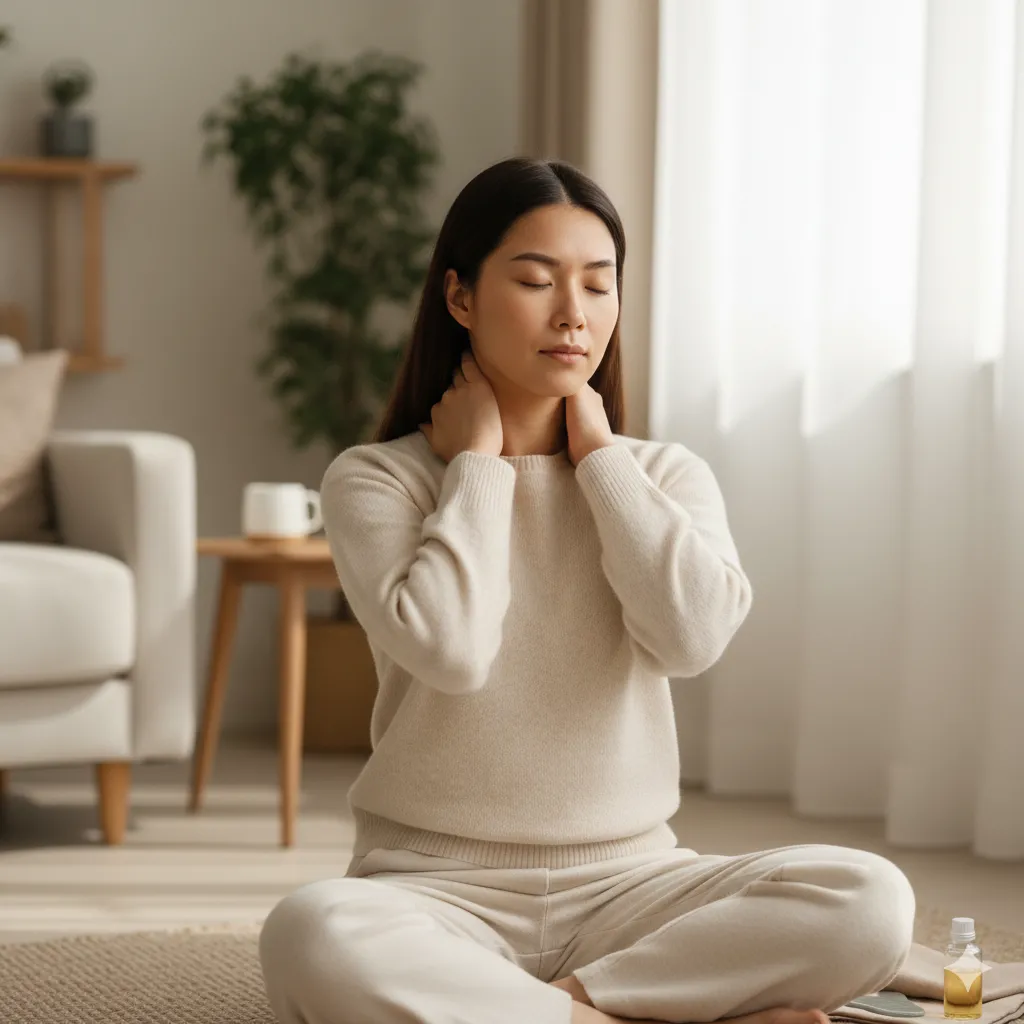
12. DIY Self-Massage: Your Hands as Healers
You don’t need to visit a professional masseuse or purchase expensive massage tools to experience the benefits of touch. Utilize your own hands to gently but firmly massage areas that tend to hold tension, such as your temples, scalp, neck, shoulders, or even your feet. Apply consistent, soothing pressure, noticing any knots or tightness and working to gently release them. If you have one, a tennis ball can be an excellent, simple tool for rolling out sore muscles in your back or under your feet. This is practical DIY self-care, a prime example of home self-care ideas for stress relief.
- Why it works: Self-massage effectively releases muscle tension, improves localized circulation, and provides deeply soothing and comforting physical sensations, promoting relaxation and reducing physical discomfort.
- No expensive products: Requires only your hands, and potentially a tennis ball if you happen to have one lying around.
Category 3: Cultivating Your Environment (Space, Creativity & Connection)
Your immediate surroundings and the quality of your connections with others profoundly influence your overall well-being. This section showcases a curated selection of self-care ideas designed to help you improve your home self-care environment, actively engage your creativity, and foster meaningful connections – even remotely. We’ll emphasize how simple, no-cost changes can lead to surprisingly deep and positive impacts on your personal wellness. These strategies highlight effective self-care without expensive products, proving that a supportive living space and nurtured relationships are key components of your holistic self-care journey.
13. Decluttering a Small Space: Mental Clarity Through Order
The state of our physical environment often mirrors the state of our minds. A cluttered space can contribute to a cluttered mind, increasing feelings of stress and overwhelm. Instead of tackling an entire house, choose just one small, manageable area – perhaps a single drawer, a shelf in your cupboard, or a corner of a room – and dedicate a focused 15-30 minutes to declutter it. Remove items you no longer need, use, or genuinely love, and organize what remains efficiently. This simple act of creating order provides a tangible sense of accomplishment and can significantly clear mental fog, making it a powerful mental health tip for home.
- Why it works: A tidy, organized environment reduces visual distractions and mental overload, leading to a calmer mind. It provides an immediate sense of control and achievement, which can boost mood and reduce anxiety.
- No expensive products: Requires only your time, hands, and perhaps a trash bag or a box for items to donate or re-purpose.
14. Rearranging Your Environment: A Fresh Perspective at Home
Sometimes, a subtle change in your physical surroundings can breathe new life into your routine and offer a fresh psychological perspective. Consider subtly rearranging a few items of furniture, reordering books on a shelf, or simply changing the orientation of your work-from-home desk. You don’t need to embark on a full renovation; even small shifts can alter the energy and flow of a space. Pay attention to how a new arrangement makes you feel – does it open up a room, create a cozier nook, or inspire new thoughts? This is a prime example of easy self-care at home that requires no monetary investment.
- Why it works: A refreshed environment can invigorate your mood, spark new ideas, and make your familiar space feel novel and exciting, contributing to a positive wellness routine at home without any cost.
- No expensive products: Relies purely on your creativity, physical effort, and existing household items.
15. Engaging in Free Creative Expression: Art for the Soul
You are inherently creative, whether you identify as an artist or not. Embrace this innate human trait by engaging in free creative expression. This could involve doodling with a pencil on scrap paper, singing your favorite song loudly (or softly), writing a short, spontaneous poem, or even telling a whimsical story to yourself or a beloved pet. The crucial element here is the act of creation and release, not the pursuit of perfection or public display. This is a vital component of creative self-care activities, available to everyone.
- Why it works: Creative activities are often deeply meditative, allowing your mind to focus on the process rather than external stressors. They provide a healthy outlet for emotions, stimulate different parts of your brain, and offer a joyful, playful break from adult responsibilities, making it a fantastic cheap self-care idea.
- No expensive products: This relies entirely on your imagination and any basic materials you already have on hand – a pen, paper, your voice, or even found objects.
16. Writing a Handwritten Letter: Deepening Connections
In our digital age, receiving a tangible, handwritten letter has become an incredibly rare and cherished event. Take a few moments to sit down and compose a thoughtful letter to a friend, family member, or even a distant acquaintance. Share personal updates, express your genuine appreciation, or simply send warm wishes. The act of writing itself can be wonderfully meditative, and the gesture of sending something personal fosters profound connection. This is a beautiful way to practice self-care at home and extend it outwards.

- Why it works: The physical act of writing can be a mindful process, helping to organize thoughts and emotions. Moreover, nurturing strong social bonds is fundamental to human well-being, combating loneliness and fostering a sense of belonging.
- No expensive products: Uses any paper and writing utensil you possess. (A stamp would be the only potential cost if mailing, but it’s the writing itself that brings the self-care benefit).
17. Connecting with Loved Ones (Virtually): Bridging Distances
When physical proximity isn’t possible, leveraging technology for connection becomes a powerful tool for self-care. Reach out to a friend or family member for a video call, a meaningful phone conversation, or even just a thoughtful text exchange. Share what’s been on your mind, listen attentively to their experiences, or simply enjoy a moment of lighthearted banter. Genuine human connection is a potent antidote to feelings of isolation and stress, making it an indispensable part of your emotional well-care activities. This is essential for home self-care ideas for mental health.
- Why it works: Humans are fundamentally social beings; robust social connections boost mood, provide crucial emotional support, and significantly reduce feelings of loneliness, all contributing to a healthier mental state.
- No expensive products: Utilizes your existing phone or internet connection and communication apps.
18. Listening to Inspiring Podcasts/Audiobooks: Learning and Growing
Engage your mind and elevate your spirit by immersing yourself in uplifting or intellectually stimulating audio content. Numerous podcasts and even many audiobooks are available completely free through public library apps or platforms like Spotify. Choose topics that genuinely pique your interest, align with your values, or inspire personal growth and reflection. This is an excellent form of indoor self-care that allows for passive learning and relaxation.
- Why it works: Audio content provides valuable mental stimulation, offers fresh perspectives, and can create a comforting sense of companionship, making downtime more productive and enriching. It’s a great example of what are some free self-care activities at home that support personal development.
- No expensive products: Uses your existing device (smartphone, tablet, computer) and free streaming services or library access.
Beyond the List: Integrating Self-Care into Your Daily Rhythm
Acquiring knowledge about these diverse self-care activities is a vital first step, but the true transformation happens when you consistently integrate them into your everyday life. Many articles list ideas without offering practical guidance on how to make them stick. Our goal is to provide actionable advice on how to incorporate self-care effectively. This section offers strategies for habit formation, emphasizes the importance of starting small, encourages listening to your body’s nuanced needs, and helps you overcome the common internal resistance that can derail even the best intentions. It’s about establishing a sustainable daily self-care routine that genuinely supports your well-being.
Making Self-Care a Sustainable Habit: Practical Tips
Consistency, not intensity, is the cornerstone of effective self-care. Think of it like watering a plant: a small amount regularly is far more beneficial than a deluge once in a while. Here’s how to cultivate a lasting practice of self-care at home:
- Start Small and Build Gradually: Don’t feel pressured to implement all 18 ideas immediately. Such an ambitious approach can quickly lead to overwhelm and burnout, defeating the very purpose of self-care. Instead, choose just one or two free self-care ideas that genuinely resonate with you and commit to trying them for a week. Perhaps it’s five minutes of mindful breathing, or a short, quiet walk. Once that feels natural, consider adding another simple self-care activity. This incremental approach fosters success and avoids feelings of failure.
- Schedule It Like a Non-Negotiable Appointment: In our busy lives, what gets scheduled often gets done. Just as you would block out time for work meetings or doctor’s appointments, consciously carve out dedicated slots in your calendar for your self-care activities. Even a mere 10-15 minutes can make a significant difference. Making it an official part of your day increases the likelihood of follow-through and demonstrates your commitment to your personal wellness tips.
- Listen Intently to Your Body’s Wisdom: Your body and mind are constantly sending signals about what they truly need. Before choosing a self-care activity, take a moment for introspection: What are you feeling right now? Do you crave energy, peace, connection, or quiet reflection? Select an activity that genuinely addresses your current state, rather than blindly following a routine. Some days, stress relief at home might look like a power nap; on others, it could be creative expression or a digital detox. This nuanced approach ensures your self-care is always relevant and effective.
- Embrace Flexibility and Forgive Imperfection: Life is inherently unpredictable. There will be days when your best intentions are derailed, and you might miss your scheduled self-care moment. When this happens, avoid falling into the trap of self-criticism or giving up entirely. Simply acknowledge it, forgive yourself, and gently recommit to your practice the very next day. Self-care is a journey, not a destination, and perfection is an unattainable standard. The goal is consistent effort and compassion, not flawlessness.
- Overcome Internal Resistance with Curiosity: Sometimes, despite knowing what’s good for us, we face internal resistance. When this happens, approach it with curiosity rather than judgment. Ask yourself, “What’s holding me back? What’s the smallest step I can take right now?” Often, just starting with an easy self-care at home activity, even for a minute, can break the inertia. This deepens your understanding of how to incorporate self-care in a way that feels natural and sustainable for you, transforming resistance into an opportunity for growth.
Self-Care: The Smart Alternative to Costly Retreats and Products (Comparative Insight)
There’s a pervasive narrative in modern society that often equates self-care with luxury, suggesting it’s something primarily purchased or consumed. We’re constantly bombarded with advertisements for lavish wellness retreats, high-end skincare lines, and sophisticated gadgets, all positioned as “essential” for your well-being. While these can certainly offer pleasurable experiences, they frequently erect a significant barrier for individuals managing tight budgets or limited time. This commercialization of self-care can inadvertently make it feel exclusive and out of reach, especially for those who need it most. This section aims to critically examine this commercialized view and highlight the inherent power of effective self-care without expensive products.
Expensive vs. Free Self-Care: Understanding True Value
The fundamental truth, often obscured by marketing, is that genuine self-care is not found in a price tag. Its efficacy stems from intentional practice, not the monetary value of an activity. Our budget self-care approach offers a potent and sustainable alternative to costly wellness trends. It unequivocally demonstrates that the most impactful self-care activities are frequently the simplest, most accessible, and entirely free. Instead of passively waiting for a grand spa day or a costly weekend getaway, you can proactively integrate moments of peace, rejuvenation, and holistic self-care into your daily life right at home. This shift empowers you to build resilience from within, using your innate resources rather than relying on external, often fleeting, purchases. It’s about cultivating consistent well-being through free self-care ideas and indoor self-care practices that are always available.
Alternatives to Spa Treatments: Sustainable Daily Wellness
Consider the long-term impact: a single expensive spa treatment offers temporary relief, while a consistent daily self-care routine built on free at-home practices cultivates sustained mental and emotional strength. Instead of seeking alternatives to spa treatments, redefine what truly constitutes a “treatment.” A mindful breathing exercise or a few minutes of gratitude journaling offers a deeply restorative experience that no product can truly replicate, and it costs absolutely nothing. This approach to cheap self-care ideas isn’t about deprivation; it’s about discerning what truly nourishes your mind, body, and spirit. It proves that learning how to practice self-care without spending money is not just practical, but often leads to a more profound and personal connection with your own wellness journey. By focusing on these accessible self-care activities at home, you invest in a continuous cycle of personal growth and stress relief at home that is always within your control.
Expert Insights & The Rise of Mindful Living
The importance of accessible self-care is not just a personal realization; it’s a concept increasingly endorsed by leading mental health professionals and wellness experts globally. As society grapples with rising stress levels and the complexities of modern life, the call for practical, sustainable well-being strategies has grown louder. Experts often emphasize that effective self-care without expensive products is not a compromise, but often the most potent path to lasting well-being. This expert self-care advice reinforces the core message of our guide: true healing and growth stem from within and are accessible through intentional, daily practices, many of which can be found in our list of free self-care ideas to do at home.
Mindful Practices at Home: A Foundation for Holistic Well-being
The global shift towards mindful living provides a powerful framework for understanding the profound value of these free, home-based self-care activities. Mindfulness, at its heart, involves paying deliberate attention to the present moment without judgment. This philosophy is deeply woven into many of the simple self-care activities we’ve discussed, such as mindful breathing exercises, sensory appreciation, and conscious engagement with your environment. These aren’t merely trendy activities; they are scientifically backed strategies for cultivating inner peace. The benefits of mindful living are extensive, including reduced stress, enhanced emotional regulation, improved focus, and a deeper connection with oneself. This holistic approach to wellness routine at home empowers individuals to actively shape their internal experience, rather than being passively swept away by external pressures.
Why Accessible Self-Care Resonates Today
In a world that often celebrates speed and material possessions, the emphasis on cheap self-care ideas and indoor self-care practices offers a refreshing counter-narrative. It aligns with expert perspectives that highlight self-compassion and inner resilience as key to enduring mental health. Leading figures in the field consistently advocate for practical, everyday methods of nurturing the self, rather than relying on episodic “treats” that provide temporary respite. This perspective validates the power of home self-care ideas for stress relief and demonstrates that what are some free self-care activities at home are, in fact, the most authentic and effective ways to foster a robust and adaptable mental state. Embracing easy self-care at home isn’t just about managing stress; it’s about building a robust foundation for enduring mental health and thriving amidst life’s demands.
Your Self-Care FAQs: Answering Common Questions
As the conversation around personal well-being evolves, so do the questions about what self-care truly entails, how it fits into busy lives, and whether it’s truly accessible to everyone. This dedicated section addresses some of the most common queries and misconceptions surrounding self-care, particularly focusing on budget-friendly and home-based practices. Our goal is to fill informational gaps and provide clear, reassuring answers to help you fully embrace the transformative power of self-care at home.
Q1: Is self-care selfish?
This is perhaps the most common and persistent myth surrounding self-care, and the answer is an unequivocal no! The notion that prioritizing your own needs is selfish fundamentally misunderstands the purpose of self-care. Think of it not as a withdrawal from your responsibilities or relationships, but as an essential act of self-preservation that enables you to show up more fully for everything and everyone in your life. You cannot pour from an empty cup. When you neglect your own mental, emotional, and physical reserves, you diminish your capacity to be patient, present, effective, and empathetic towards others. By engaging in simple self-care activities at home, you are actively recharging your batteries, building resilience, and enhancing your overall capacity. It’s an investment in your well-being that pays dividends for all your relationships and commitments. Embracing a daily self-care routine is about becoming a more robust, healthier version of yourself, not a less giving one.
Q2: How often should I practice self-care?
Self-care isn’t a one-time event or a luxury you indulge in only when completely burnt out; it’s an ongoing, continuous practice. The most effective approach is to integrate small, consistent moments of self-care into your daily rhythm, rather than waiting for a large, infrequent ‘reset.’ Aim for brief, intentional self-care activities at home every day, or at least several times a week. Even dedicating just 5-10 minutes to a mindful practice, like conscious breathing or a moment of gratitude, can significantly impact your mental health at home and overall stress levels. Consider it akin to brushing your teeth: small, regular acts of hygiene yield the best long-term results. The key is consistency and listening to your body’s fluctuating needs; some days might call for more intensive relaxation techniques at home, while others might just need a quick moment of indoor self-care.
Q3: Can self-care really be free?
Absolutely, yes! The very premise of this article, and the core of its 18 free self-care ideas, is to demonstrate precisely this. The true efficacy of self-care doesn’t stem from its monetary cost, but from the intentionality and consistency of the practice. As we’ve explored, the most profoundly impactful self-care activities leverage resources you already possess: your body, your breath, your thoughts, your home environment, and your personal connections. Many articles focus on paid services, but authentic self-care without expensive products is incredibly powerful. The satisfaction and lasting benefits derived from budget-friendly self-care at home tips, such as DIY self-care or learning something new with free online resources, are often more meaningful because they are cultivated through your own intrinsic effort and resourcefulness. This makes holistic self-care a universal right, not a privilege.
Q4: What if I don’t feel like doing any self-care?
It’s completely normal to experience days where your motivation for self-care, or anything for that matter, feels low. This resistance is a natural human experience. When you find yourself in this situation, don’t succumb to guilt or self-criticism. Instead, try a different approach:
- Start with the Smallest Step: Choose the absolute easiest, most minimal self-care activity on the list. Perhaps it’s just one minute of focused breathing, or simply sitting by a window for a moment. Often, the act of starting, no matter how small, can generate enough momentum to continue or even try something else.
- Reframe Your Perspective: Remind yourself of the “why.” Why do you want to practice self-care? Is it to feel less stressed, to improve your mood, or to be more present for your loved ones? Connecting to this deeper purpose can reignite motivation.
- Listen to Your Resistance: Sometimes, not wanting to do self-care is a signal in itself. Perhaps your body genuinely needs rest, or you’re feeling overwhelmed and need a simpler approach. Listen to what that feeling is telling you and adjust your easy self-care at home plan accordingly.
Even on days of low motivation, engaging in any form of home self-care ideas for stress relief, no matter how minor, is a victory.
Q5: How do I choose which self-care ideas are best for me?
The journey of self-care is deeply personal, and what resonates with one individual might not with another. The best approach is to experiment and engage in self-discovery.
- Trial and Error: Don’t be afraid to try different ideas from each category (mental, physical, environmental, connection). Pay close attention to how each activity makes you feel both during and after the practice. Does it bring you peace? Energy? Clarity? Joy?
- Reflect on Your Needs: Your needs will fluctuate. On a high-stress day, a relaxation technique might be perfect. On a day feeling isolated, connecting with a loved one could be key. Regularly check in with yourself to assess what you truly need in the moment.
- Build a Personalized Repertoire: Over time, you’ll develop a personal toolkit of go-to self-care activities that reliably support you. Your daily self-care routine should be dynamic, adapting to the ebbs and flows of your life. There’s no single “right” answer; it’s about what works for you, when you need it.
Conclusion: Your Journey to Accessible Well-being Starts Now
The journey to authentic well-being, as we’ve thoroughly explored, doesn’t hinge on financial expenditure or elaborate plans. It is a profound realization that self-care is a fundamental human right, not a frivolous luxury reserved for a select few. This article has illuminated 18 powerful, easy self-care at home activities that are not only effective but also entirely free and accessible from the comfort of your own living space. By embracing these simple yet impactful free self-care ideas, you gain the profound ability to actively manage stress, significantly boost your mood, and cultivate an unshakeable sense of resilience.
Remember, true empowerment in self-care stems from realizing that the most potent tools for your mental and physical health are already within your grasp. You don’t need a budget-friendly self-care at home tips list just to save money; you need it because the most effective solutions are often rooted in simplicity and intentionality. We encourage you to move beyond passive reading. Pick one or two ideas that truly resonate with you, start today, and gently integrate them into your daily rhythm. Embark on your personalized path to accessible, empowered well-being. Your mind, body, and spirit will undoubtedly express their gratitude for this investment in what is self-care truly about: showing up for yourself consistently and compassionately.
Resources
To further explore the concepts of accessible self-care and find practical tools for your wellness journey, consider these credible resources:
- An Introduction to Mindfulness and Meditation Practices: This comprehensive overview from the National Institutes of Health explains the science behind mindfulness and offers practical information on how these techniques can help manage stress. https://www.nccih.nih.gov/health/meditation-and-mindfulness-what-you-need-to-know
- Enhancing Health Through Diverse Exercise Types: The National Institute on Aging emphasizes the importance of incorporating aerobic, muscle-strengthening, and balance exercises into your routine to improve health and physical ability. These activities not only enhance endurance and strength but also help prevent falls and reduce the risk of chronic diseases. Discover insights on integrating varied exercises for better health.
- The Therapeutic Benefits of Expressive Writing: Explore the mental health advantages of journaling, with insights from the University of Rochester Medical Center on how this simple practice can help you manage anxiety and reduce stress. https://www.urmc.rochester.edu/encyclopedia/content.aspx?ContentID=4552&ContentTypeID=1
- Understanding the Importance of Social Connection for Well-being: The American Psychological Association delves into the significant impact of social connection on health and offers science-backed reasons to nurture your relationships. https://www.apa.org/monitor/2019/05/ce-corner-isolation


